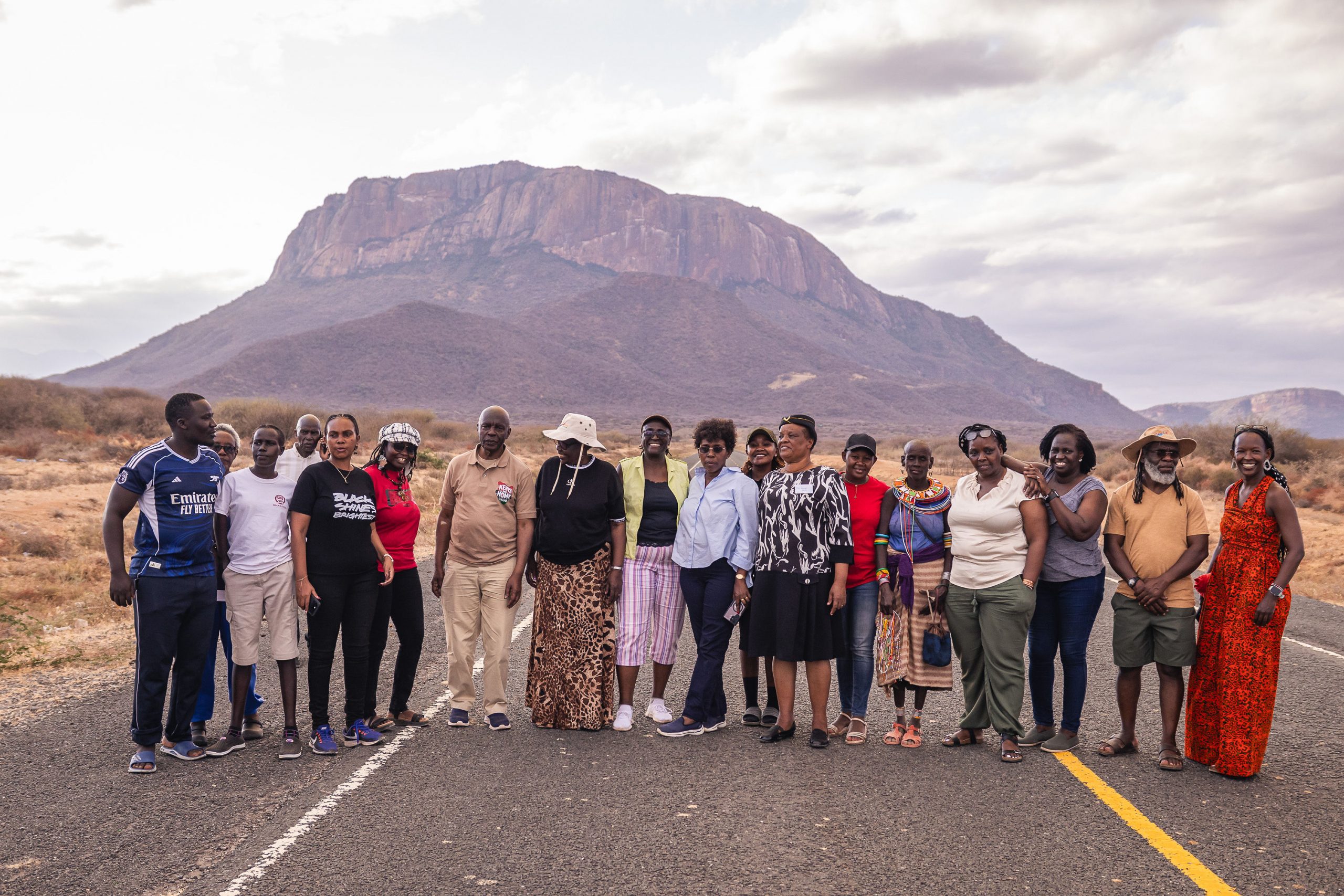
There are journeys that fill a photo album, and there are journeys that quietly reshape the way you look at the world.Our journey to Mt. Ololokwe belonged to the second kind.
Long before sunrise, while the stars still lingered above the Samburu sky, we gathered at the foot of the mountain. The air was cool and carried the scent of wild herbs and damp earth, while somewhere in the darkness the first birds were already announcing the coming of a new day. Our group assembled for the dos and donts briefing, we got our lunchpacks, the guides insisted on us having enough water, we tightened our boots, adjusted our backpacks, exchanged sleepy smiles and nervous laughter, and then, almost without speaking, we began to climb. As we climbed up, every step the mountain revealed a little more of itself. The trail narrowed, the rocks grew steeper and our breathing became heavier, yet there was something about the quiet strength of the landscape that encouraged us to keep moving. Mt. Ololokwe does not surrender its summit easily. It asks you to earn every metre, and somewhere along the climb you realise that the mountain is not interested in how quickly you reach the top. It is inviting you to slow down, to pay attention and to become part of its rhythm.
Our Samburu guides walked ahead with an ease that could only come from a lifetime spent reading the land. What seemed to us like an ordinary forest was, to them, a living conversation. They noticed broken branches, fresh footprints pressed into the soil and sounds that escaped our untrained ears. At one point they quietly raised a hand and asked us to stop. Not because the path was dangerous, but because we were no longer the only travellers on the mountain. A small herd of elephants was making its way through the forest.
Without panicking or shouting, we simply stood in complete silence while the elephants continued their journey, unhurried and undisturbed, disappearing between the trees as though the forest itself had opened to welcome them. It was a moment of extraordinary simplicity, yet it spoke volumes about the Samburu way of living with nature. There was no struggle for ownership and no desire to dominate but there was only respect for nature and the animals. The mountain belonged to all who lived upon it, whether they walked on two legs or four, whether they flew through the canopy or rooted themselves deep into the earth.
As we continued climbing, the forest became one of the journey’s greatest gifts. Sunlight filtered softly through ancient trees while birds filled the air with songs so varied that the mountain seemed to have composed its own orchestra. Brilliant sunbirds darted between flowering shrubs, white bellied go away birds called from the branches, hornbills glided overhead and colourful bee eaters flashed through the clear morning light. Every pause became an opportunity to notice another sound, another feather, another reminder that life flourishes where it is allowed to exist in peace.
Higher and higher we climbed. There were moments when our legs trembled, when every step demanded determination and when the summit still seemed impossibly far away. Yet no one wished the journey to end. We encouraged one another, shared water, waited for those who needed a slower pace and celebrated every difficult stretch we left behind. Without realising it, the mountain was teaching us something far greater than endurance. It was teaching us how easily strangers become companions when they carry one another through moments of exhaustion.
When we finally reached the summit, words abandoned us.
Before us lay an endless panorama of Samburu. Valleys stretched into the horizon, scattered acacia trees painted the landscape below and distant hills dissolved into the blue embrace of the sky. The wind carried a silence that was neither empty nor lonely. It was full of presence, full of gratitude and full of wonder.
Some of us laughed, while others simply stood still. Others wiped away tears they had not expected to shed.
It was impossible to stand there without feeling both incredibly small and deeply connected to something much greater than ourselves. Every difficult step, every aching muscle and every moment we had wondered whether we could continue suddenly made perfect sense. The mountain had not challenged us to prove our strength. It had invited us to discover our humility. Yet Mt. Ololokwe offers treasures that cannot be measured by its views alone.
Hidden among its sacred places is the prayer site where pilgrims place a stone as they whisper their hopes to the Creator, trusting that even the smallest offering can carry the deepest faith. There are places where generations of Samburu boys have marked their passage into adulthood and places where stories older than memory are still spoken with reverence. At the foot of the mountain flows a sacred river where women gather to pour milk as they pray for rain, reminding us that for the Samburu people the land is never separated from faith, community or survival. Nature is not simply admired. It is honoured. It is thanked. It is protected because it is family. Perhaps this is why Mt. Ololokwe feels so different. It has never been merely a mountain.
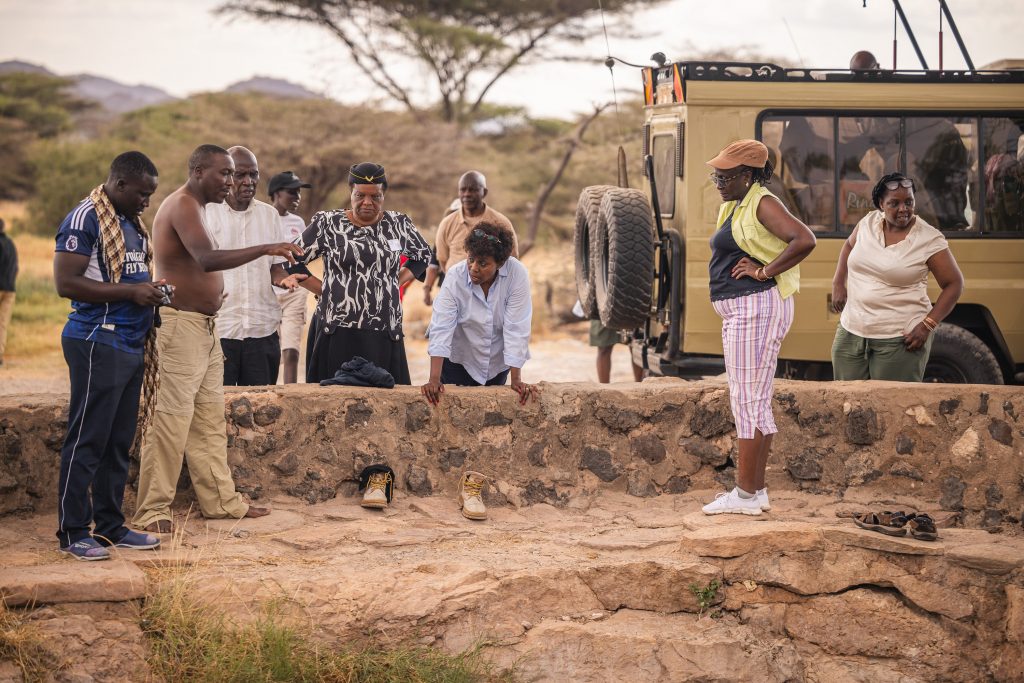
It is a living home of memory where every path carries a story, every stone bears witness to prayer and every tree stands as a silent keeper of generations.
As we descended, our legs protested every step and our knees reminded us that climbing down can be just as demanding as climbing up. Yet our hearts felt astonishingly light. Somewhere between the summit and the valley we realised that we were no longer carrying only our backpacks. We were carrying one another’s stories, shared laughter, quiet encouragement and the friendships that had deepened with every difficult ascent and careful descent.
The mountain had stripped away every unnecessary distraction and left us with what truly matters. Good company. Honest conversations. The generosity of strangers. The wisdom of those who know the land. The patience to move at nature’s pace. The privilege of witnessing elephants disappear peacefully into the forest. The joy of hearing birds welcome a new morning. The overwhelming beauty of standing above the clouds and recognising, perhaps more clearly than ever before, how extraordinary this world already is.
At Panda Mbegu Initiative we believe that places like Mt. Ololokwe deserve more than admiration. They deserve protection, because when a sacred landscape is lost, we lose far more than trees or wildlife. We lose stories that have never been written, ceremonies that have shaped generations, ecological knowledge refined over centuries and ways of living that remind humanity that coexistence is possible.
Our journey up Mt. Ololokwe did not end when we returned to the foot of the mountain.
In many ways, it had only just begun.
For the mountain followed us home, quietly reminding us that the greatest journeys are never measured by the height we reach, but by the depth with which we learn to see, to listen and to belong.
Written by Jenniffer and Edna